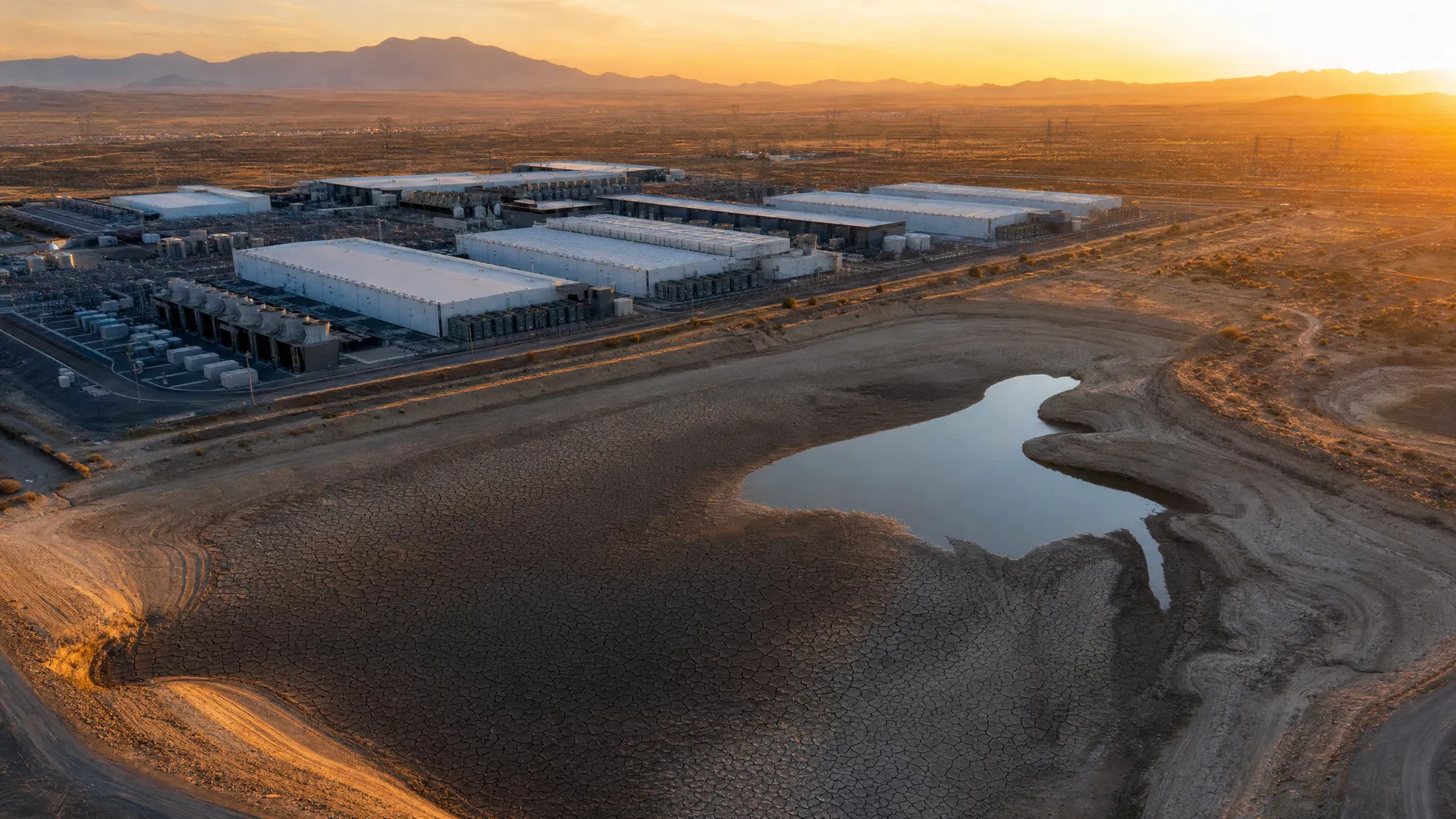
In the first week of May 2026, two data center projects became national news stories over water.
In Fayette County, Georgia, a 615-acre campus developed by Quality Technology Services — a company owned by Blackstone — was found to have consumed more than 29 million gallons of water through meters that weren't properly connected to the billing system. The issue came to light after residents noticed water pressure changes in a nearby subdivision. A local attorney obtained utility records through a public records request. The story was reported by Fortune, Politico, and local outlets. QTS paid the retroactive charges promptly and stated that any suggestion of improper water use was "categorically false," attributing the situation to a billing error by the county during a meter upgrade.
In Tucson, Arizona, a contractor working on a data center site known as Project Blue was found to have transported water outside city limits using a construction meter — to a site the City of Tucson had declined to serve with municipal water. The developer stated the city had issued a permit through normal channels. The city said the document was an application for a construction meter intended for use within city limits, not authorization to transport water elsewhere. Pima County issued a Notice of Violation related to dust control.
Both situations involved genuine ambiguity about process, authorization, and communication. Both became public before they were resolved. And both are now part of a national conversation about data centers and water.
Read the full Fortune report here: America's data centers are thirsty. Rural towns are paying the price.
The Scale of What's Coming
These two projects are early data points in a much larger story.
The EPA projects U.S. data centers will directly consume between 38 and 73 billion gallons of water annually by 2028 — up from 17.4 billion in 2023. In Texas alone, data centers are projected to use as much as 399 billion gallons by 2030. Google's data centers in The Dalles, Oregon — a city of 16,000 — consumed 55 million gallons in 2021, roughly a quarter of the city's total annual water use.
More than 50 cities across the United States have enacted bans or moratoriums on new data center construction. Water-stressed states are tightening permitting. Utilities are grappling with demand projections they weren't built to absorb. Communities are paying closer attention — and using public records laws, local media, and social platforms to surface information faster than ever before.
This is the environment in which the next generation of AI infrastructure will be built.
Every Party Has Something at Stake
The data center industry is investing at historic scale. The projects being developed today will power AI applications, cloud services, and digital infrastructure for decades. Developers need to move quickly, secure permits, manage construction timelines, and maintain relationships with the utilities and municipalities that serve their sites.
Municipalities and utilities are navigating a new category of industrial demand — one that arrived faster than most planning frameworks anticipated. They have obligations to existing ratepayers, long-term water resource commitments, and elected officials who are accountable to constituents asking hard questions.
Communities want to understand what is being built in their backyards, what it will mean for their water supply, and whether their concerns will be heard before decisions are made rather than after.
None of these interests are inherently in conflict. But they require deliberate, proactive communication to align — and when that communication breaks down, the consequences are costly for everyone involved.
What Effective Navigation Looks Like
Sigler's team has worked at the intersection of water infrastructure, data center development, and public affairs for years — including experience at the highest levels of the data center industry itself. A few things we know to be true across every engagement:
Early disclosure reduces long-term risk for everyone. When water use, permitting status, and project timelines are communicated proactively, the information environment is controlled. When they surface through public records requests or resident complaints, the narrative is not.
Regulatory approval and community acceptance are separate processes. A permit authorizes a project. It does not resolve the questions communities have about it. Organizations that treat these as the same process consistently encounter friction that could have been avoided.
Stakeholder mapping matters before groundbreaking. Understanding who the relevant voices are — utilities, elected officials, community organizations, neighboring landowners — and engaging them early creates the conditions for durable project support.
The goal is not to win the argument. It is to avoid having one. The most successful infrastructure projects we have worked on are ones where the community understood what was being built, why, and what it meant for them — before they had to ask.
The Opportunity
The demand for AI infrastructure is not slowing down. The constraints on water resources are not easing. The communities, utilities, and municipalities at the center of this dynamic are becoming more sophisticated, more organized, and more vocal.
That is not an obstacle. It is a communications challenge — one that is entirely navigable for organizations that approach it with the right strategy and the right team.
Whether you are a developer bringing a data center project to a new market, a municipality establishing the terms under which you will engage with developers, or a utility managing the demands of both, Sigler has the expertise to help you move forward with clarity and confidence. Learn more about our work in energy and infrastructure.